About the Artist
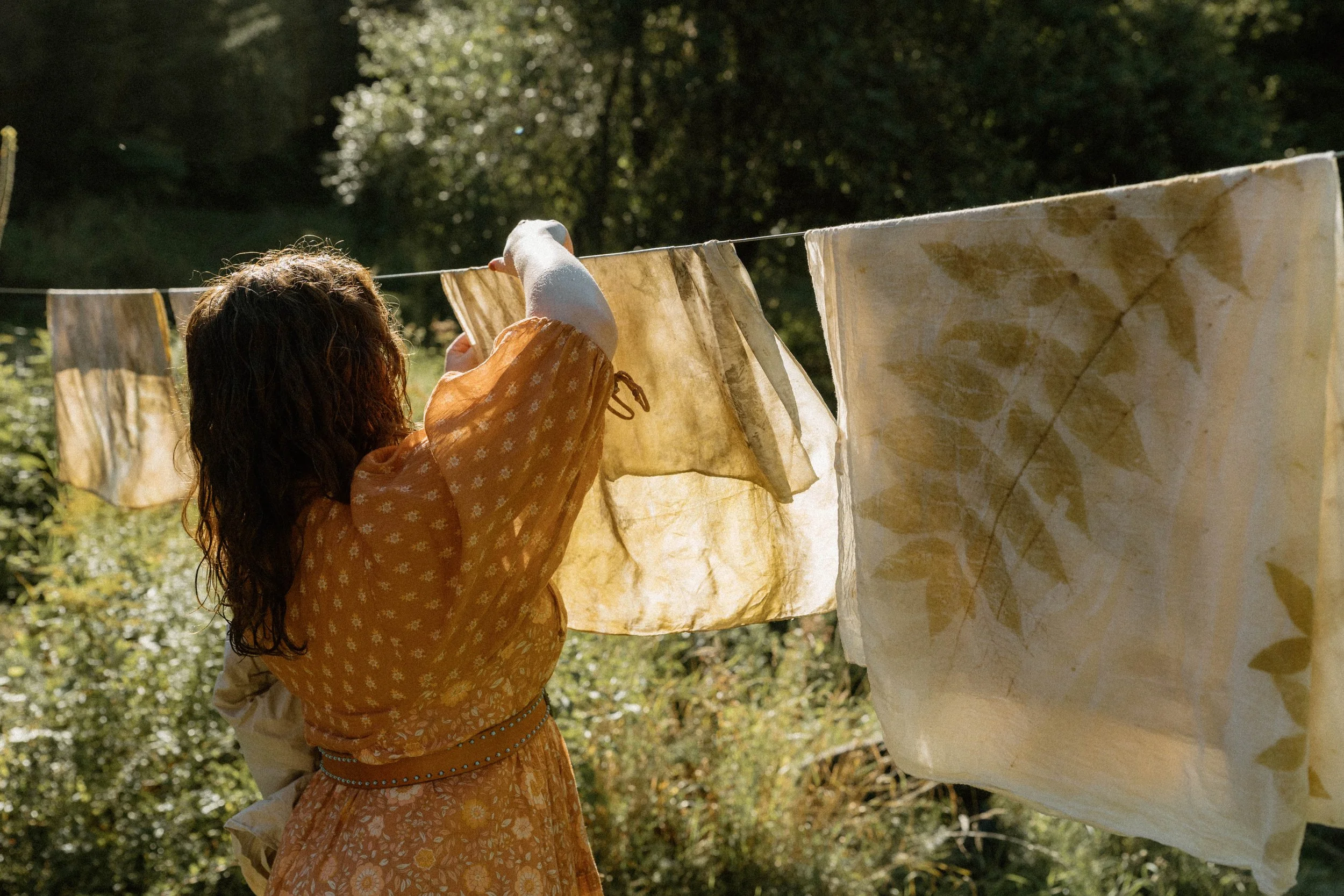
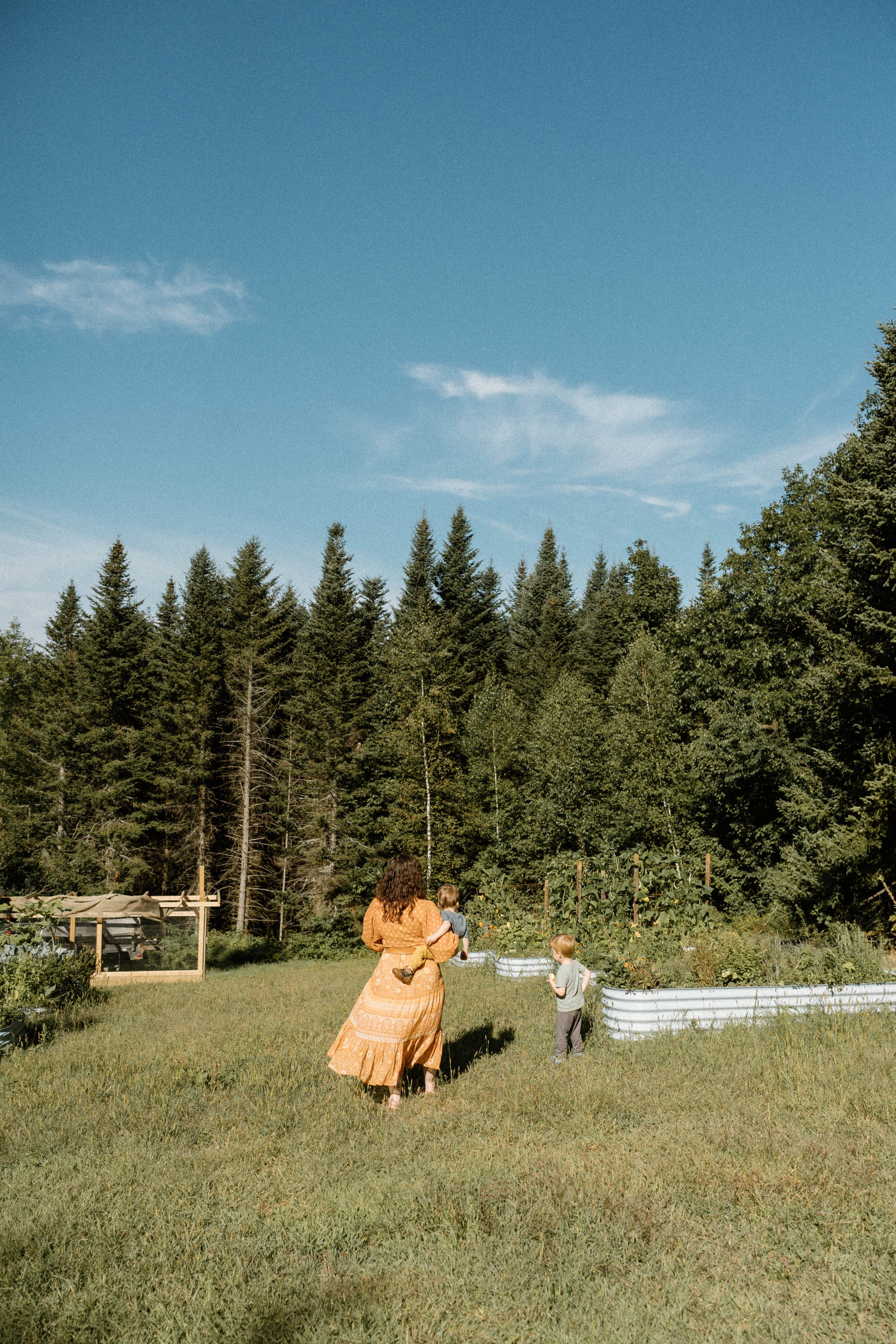
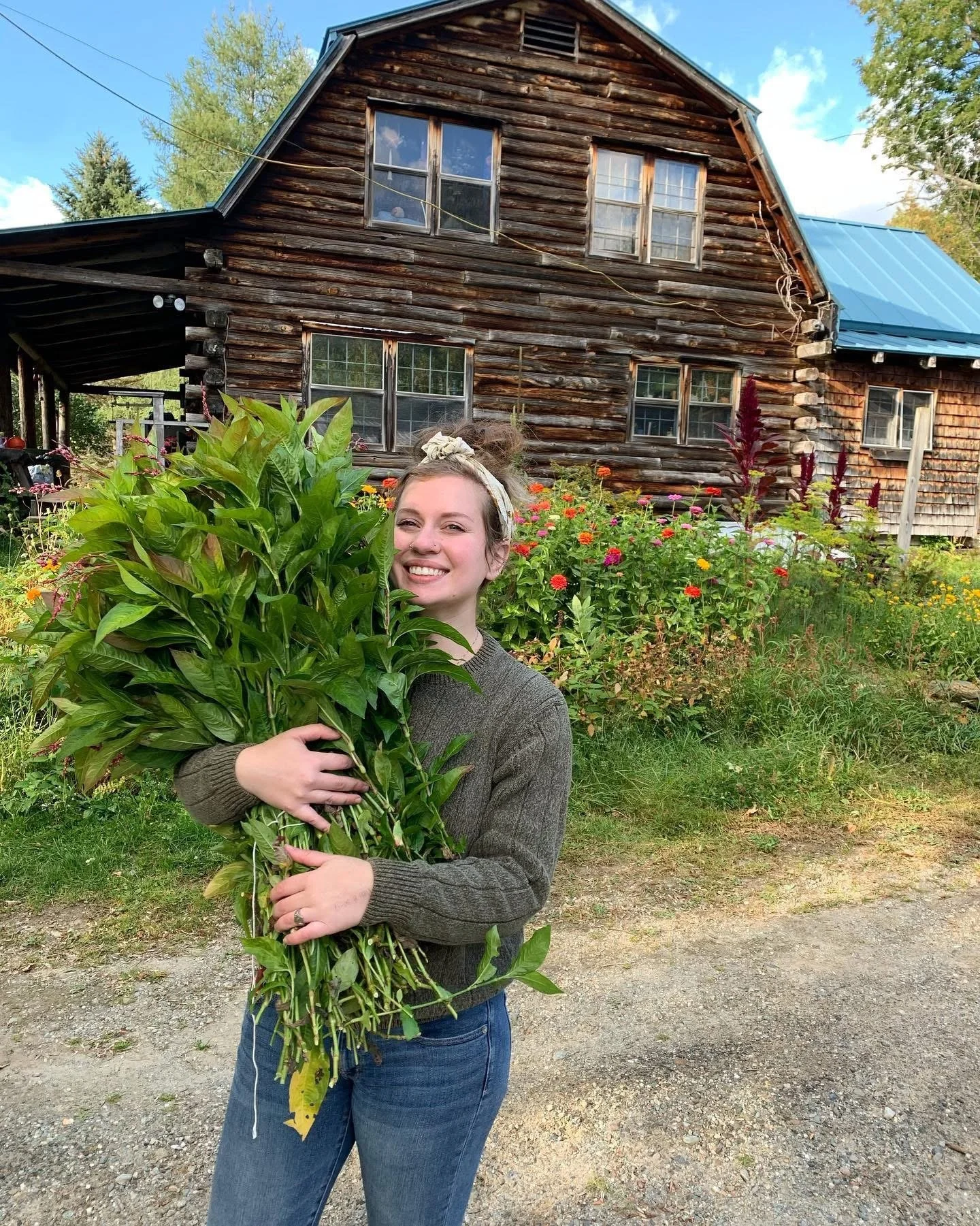
Using pigments from nature and natural fibers, my art explores our connections to nature, our communities, and our inner child. I create naturally dyed textiles using plants foraged from local Vermont landscapes or grown in my dye garden at the base of Mount Mansfield. My practice follows seasonal rhythms by growing, gathering, preserving, and transforming plants into living color through botanical dyeing and ecoprinting.
I believe nothing is perfect and everything is temporary. Natural dyeing reminds me of this every day. It encourages me to slow down, appreciate the beauty of imperfection- both in nature and in my own work, and savor each moment knowing it won’t last forever.
Working with natural materials reminds me that art is play. For me, the purpose of art is to spark joy, cultivate curiosity, and bring people together. The seasonal influence of my craft reminds me to be present and appreciate what each season has to offer. All of this deepens my connection to my own inner child, particularly in a society that is fast paced and emphasizes “more, more, more”.
Through my textiles, I explore themes of introspective reflection, impermanence, and connection. My hope is that my art encourages others to pause, connect with nature, and feel inspired by what our local landscapes have to offer us. Whether you stop by my tent at a market or peruse my work online, I hope that it invokes feelings of calm, slowing down, and sitting in the joy of the present moment.
- Carolyn Sommer
The Process
Before any fabric even enters a dye bath, it goes through a multi-step pre-treatment process. This process typically takes between 2-4 hours of preparation and ensures the natural dyes bond to the textile so their color can withstand repeated wash and wear.
What is natural dyeing and ecoprinting?
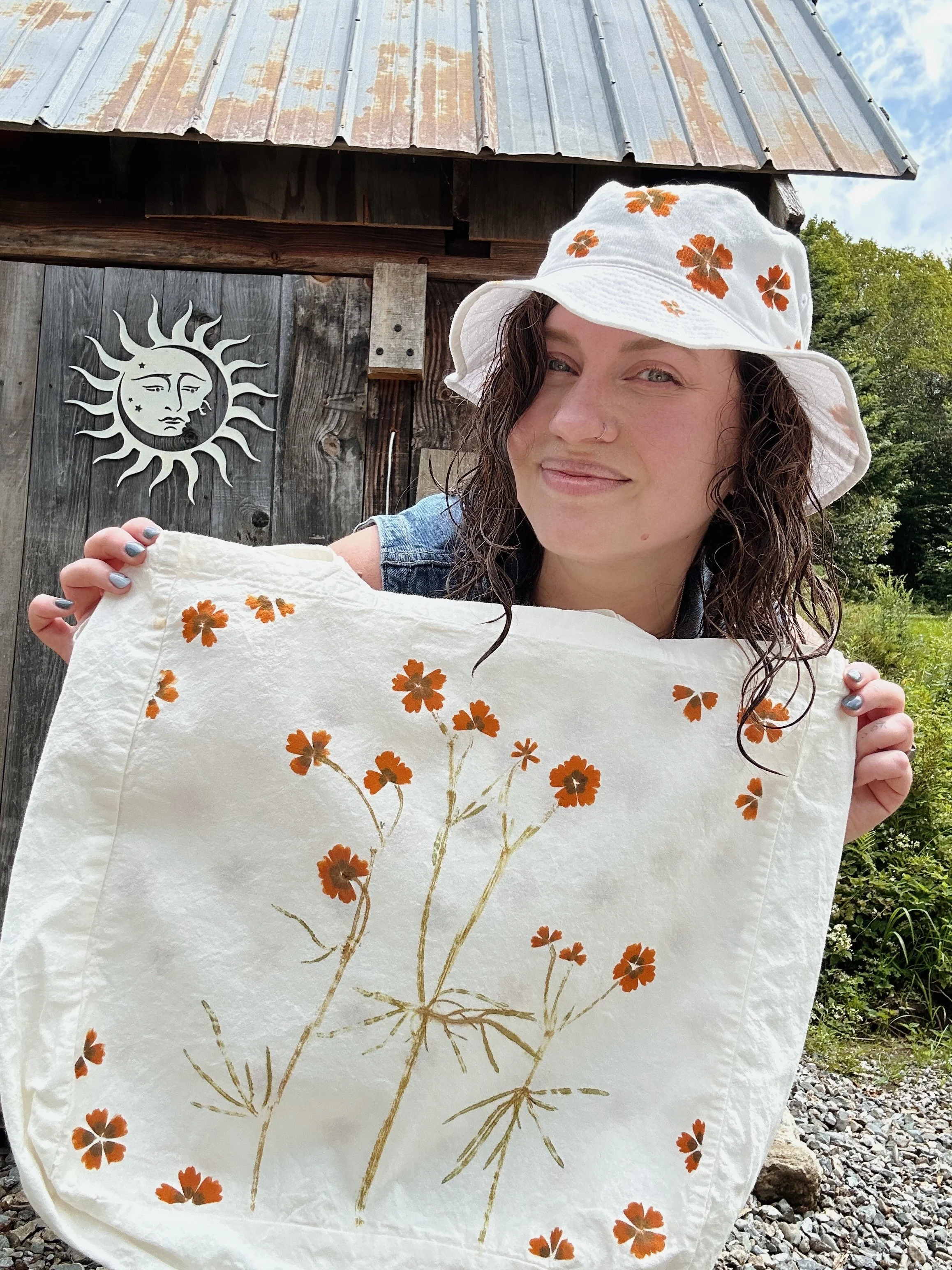
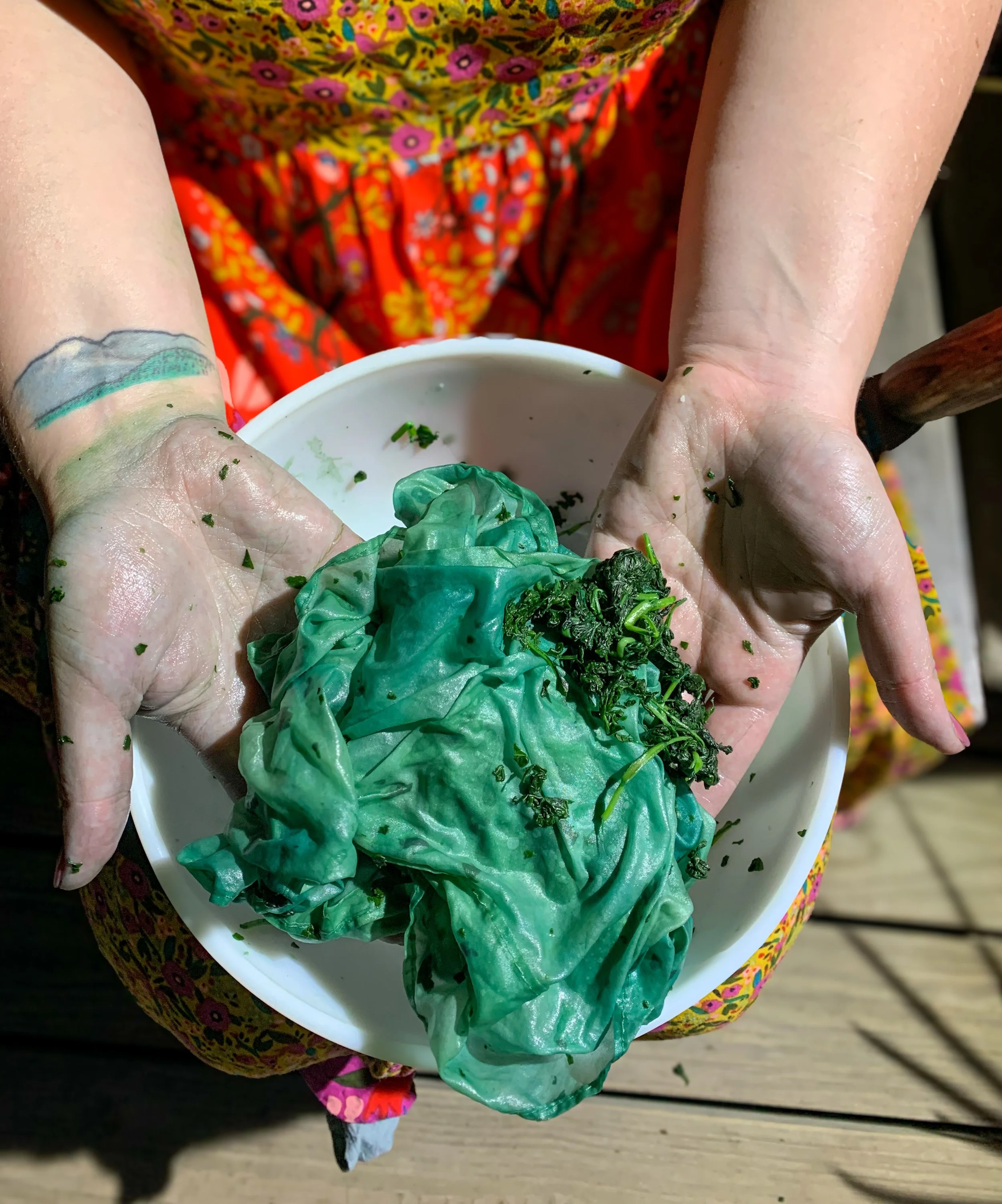
The textiles you see are all dyed with real leaves, flowers, roots- and even the occasional insect! All the fabric has been meticulously pre-treated before even entering a dye bath to ensure long lasting color.
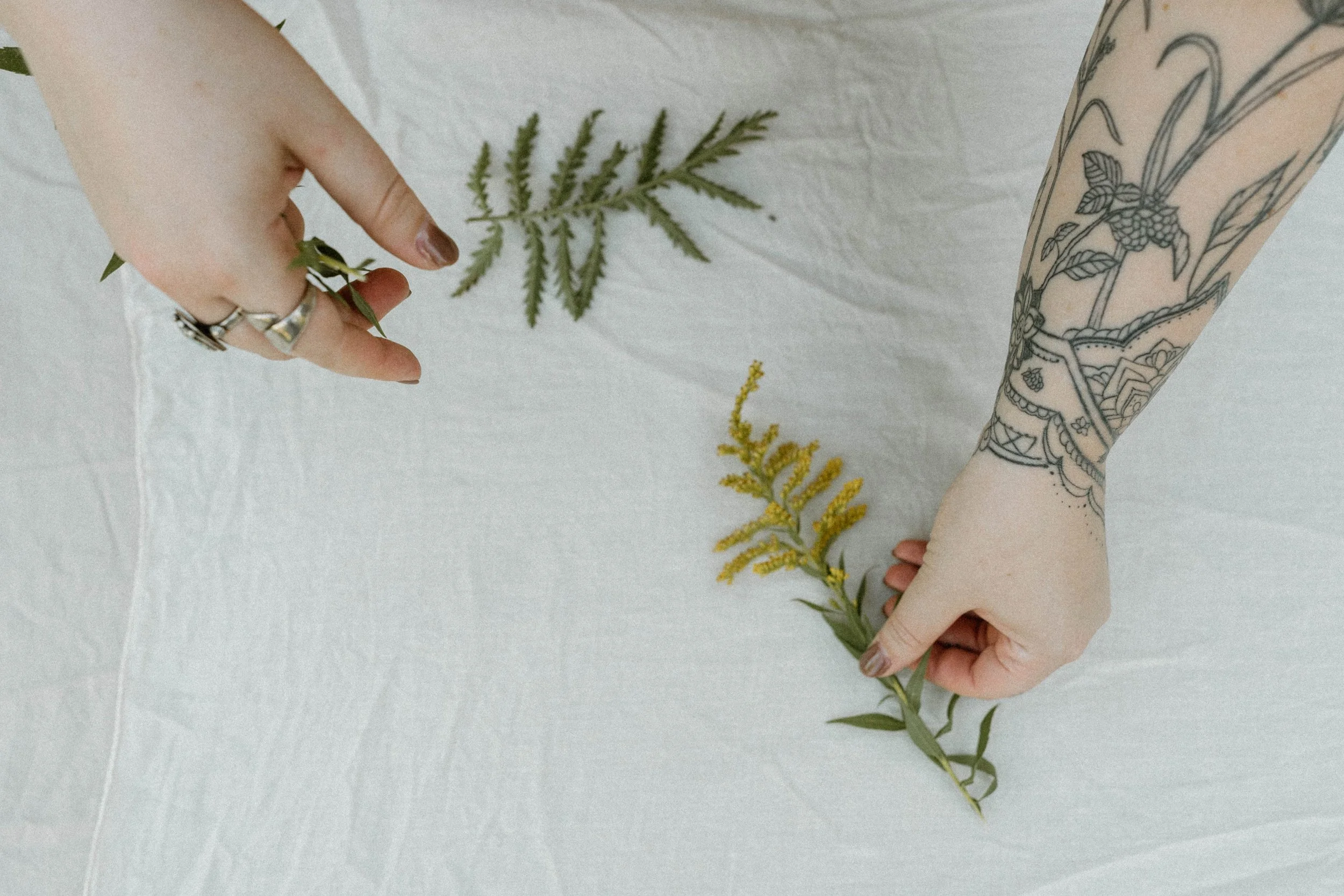
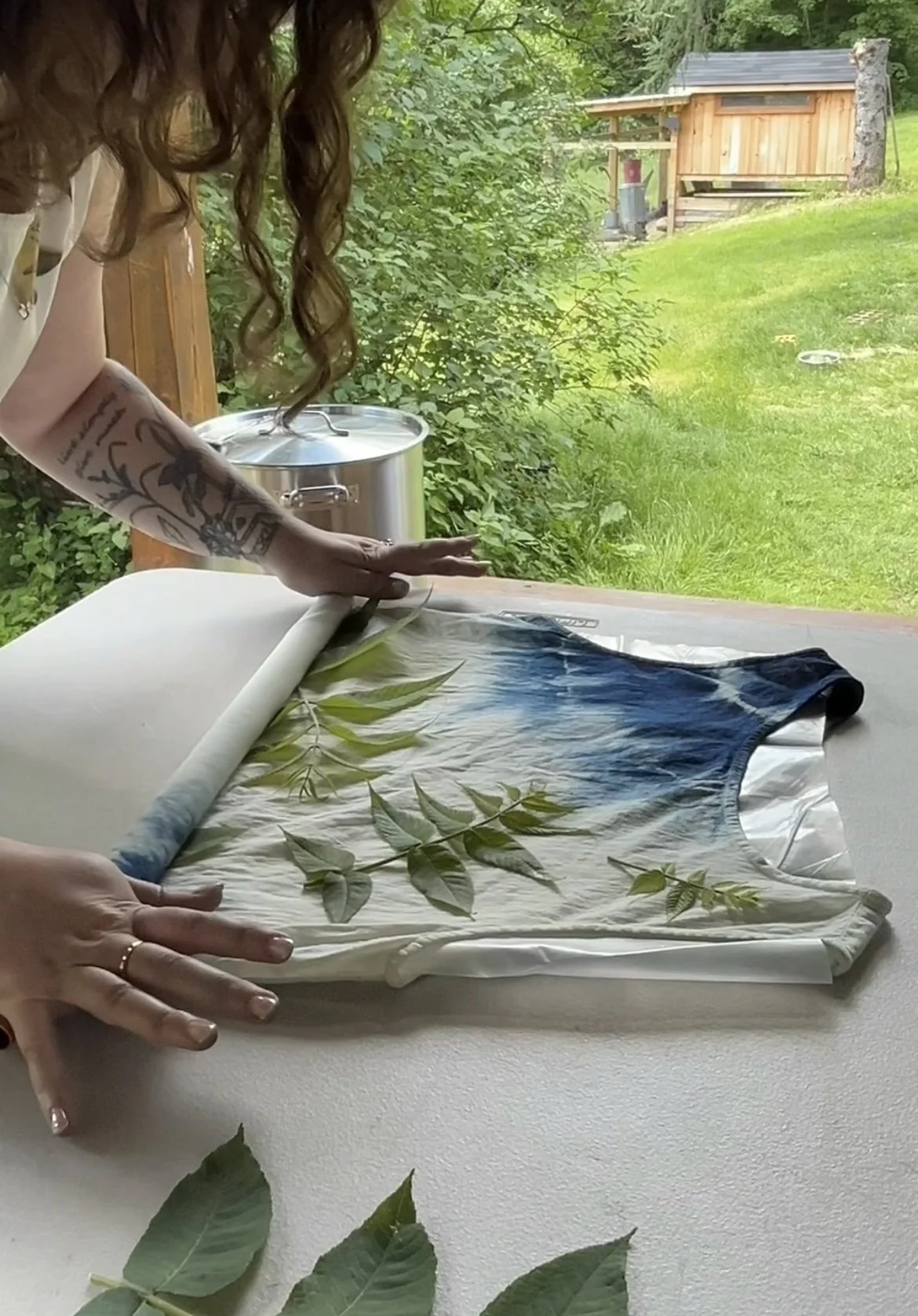
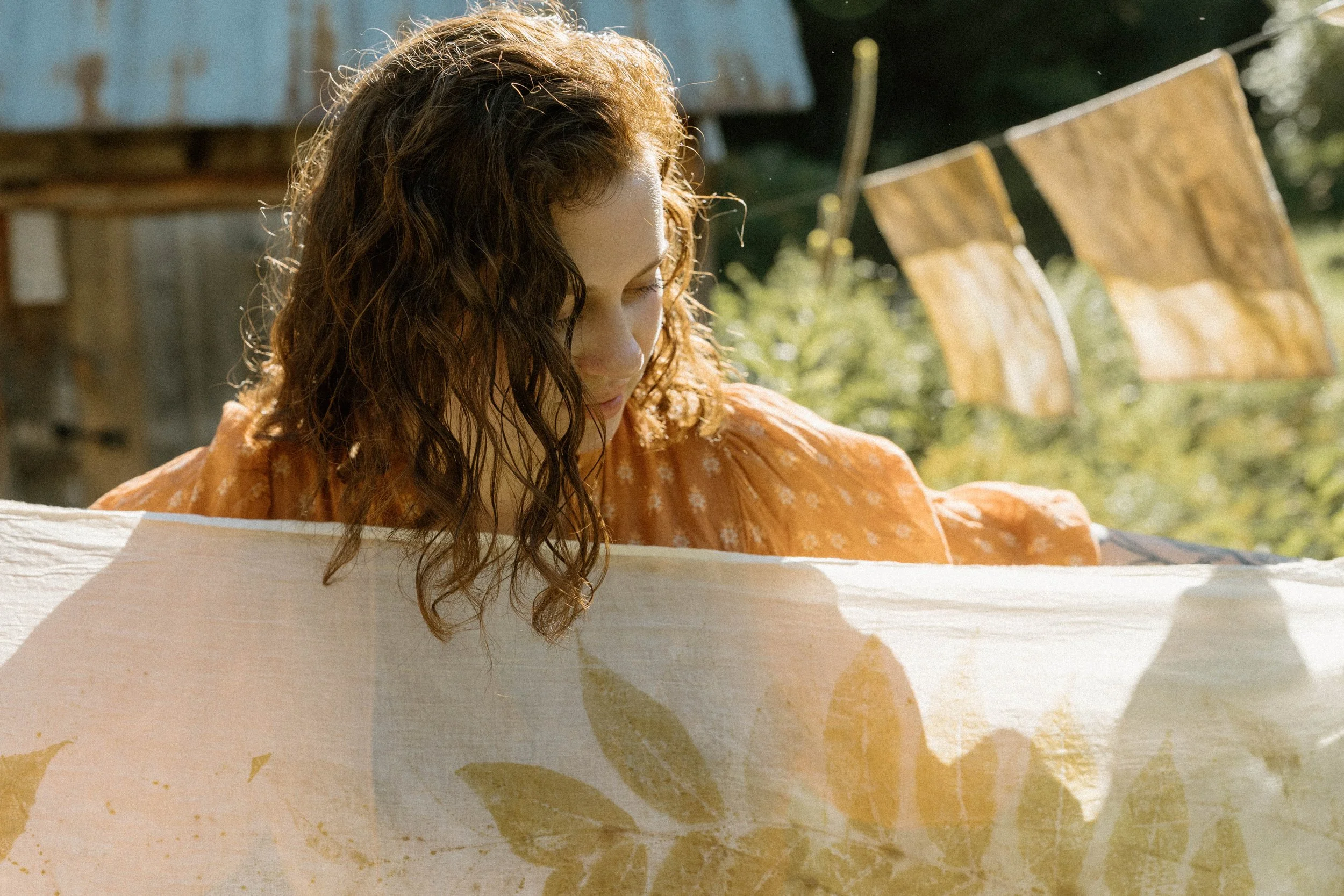
Ecoprinting is the process of using leaves and flowers to create individual prints on fabric. Plant material is intentionally placed on the fabric before being bundled tightly and steamed. The result is one-of-a-kind patterns that capture every detail of the plants used- highlighting every vein, insect bite, and texture.
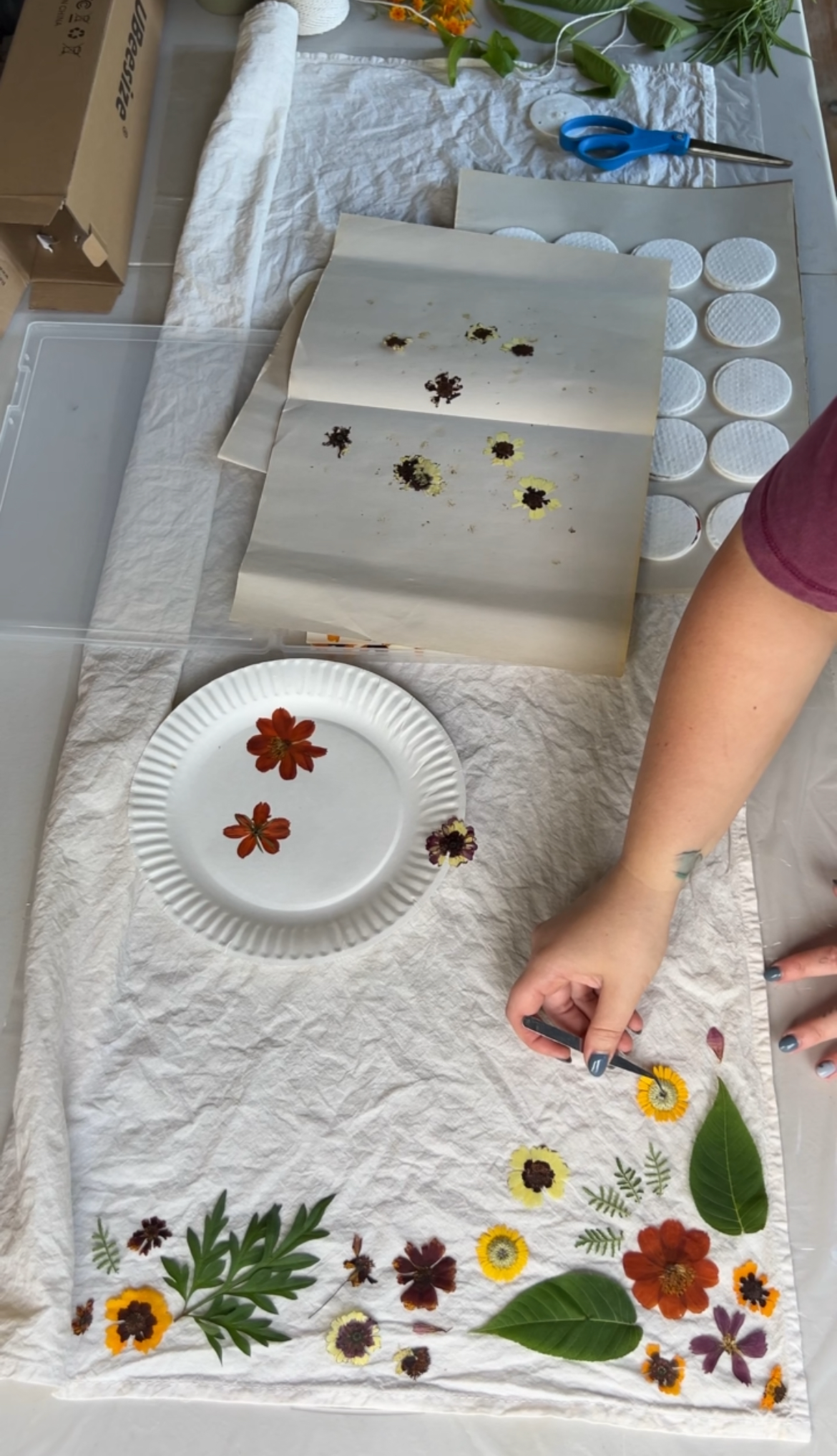
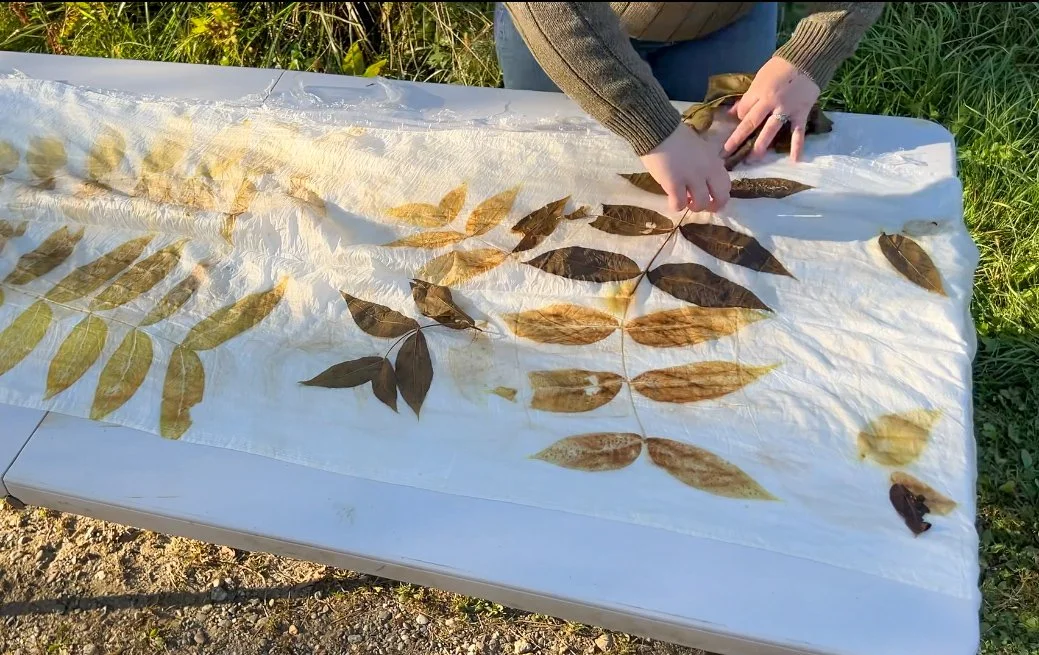
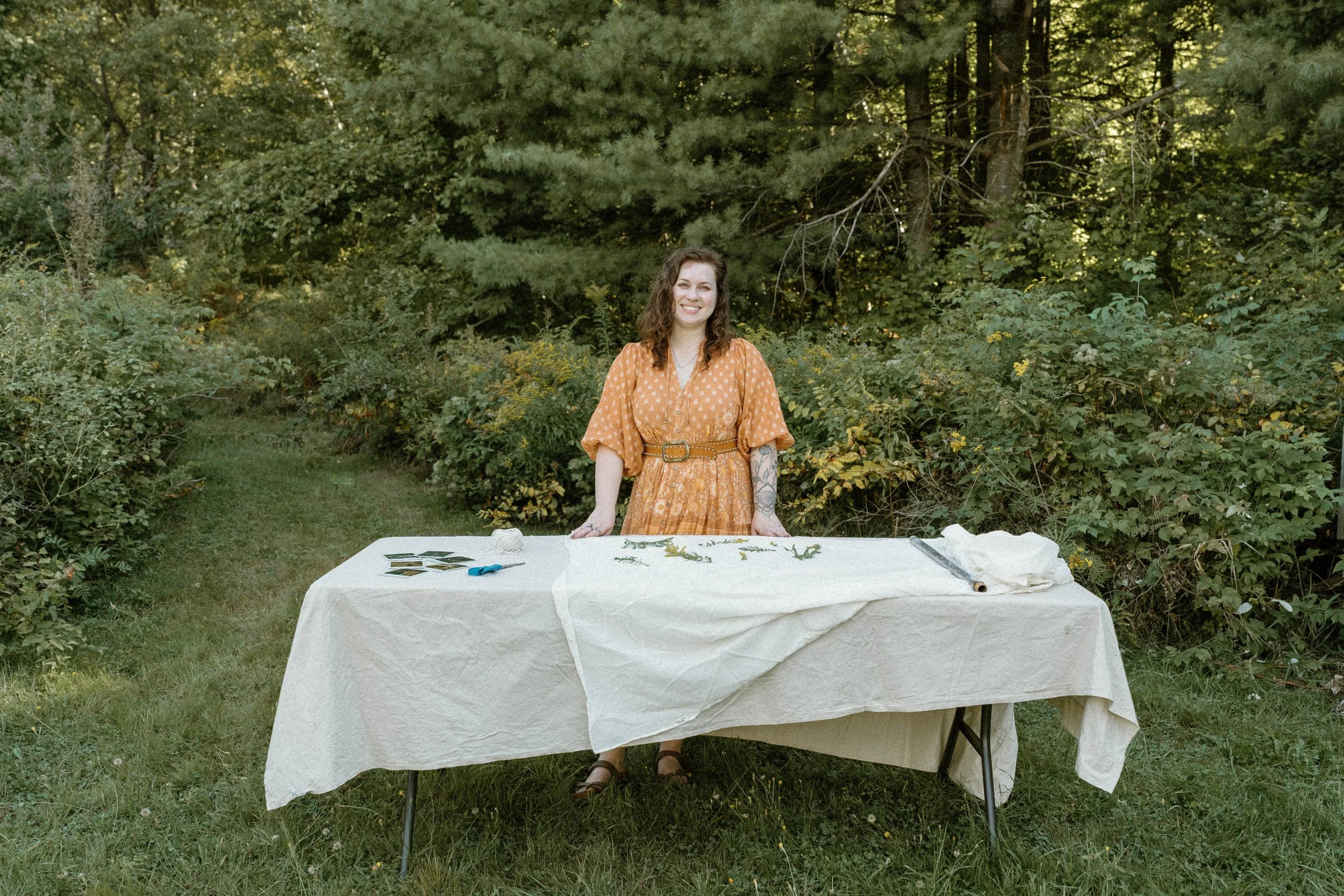
Leaves & flowers are placed on the pre-treated cotton, then steamed to help the pigment transfer to the fabric.
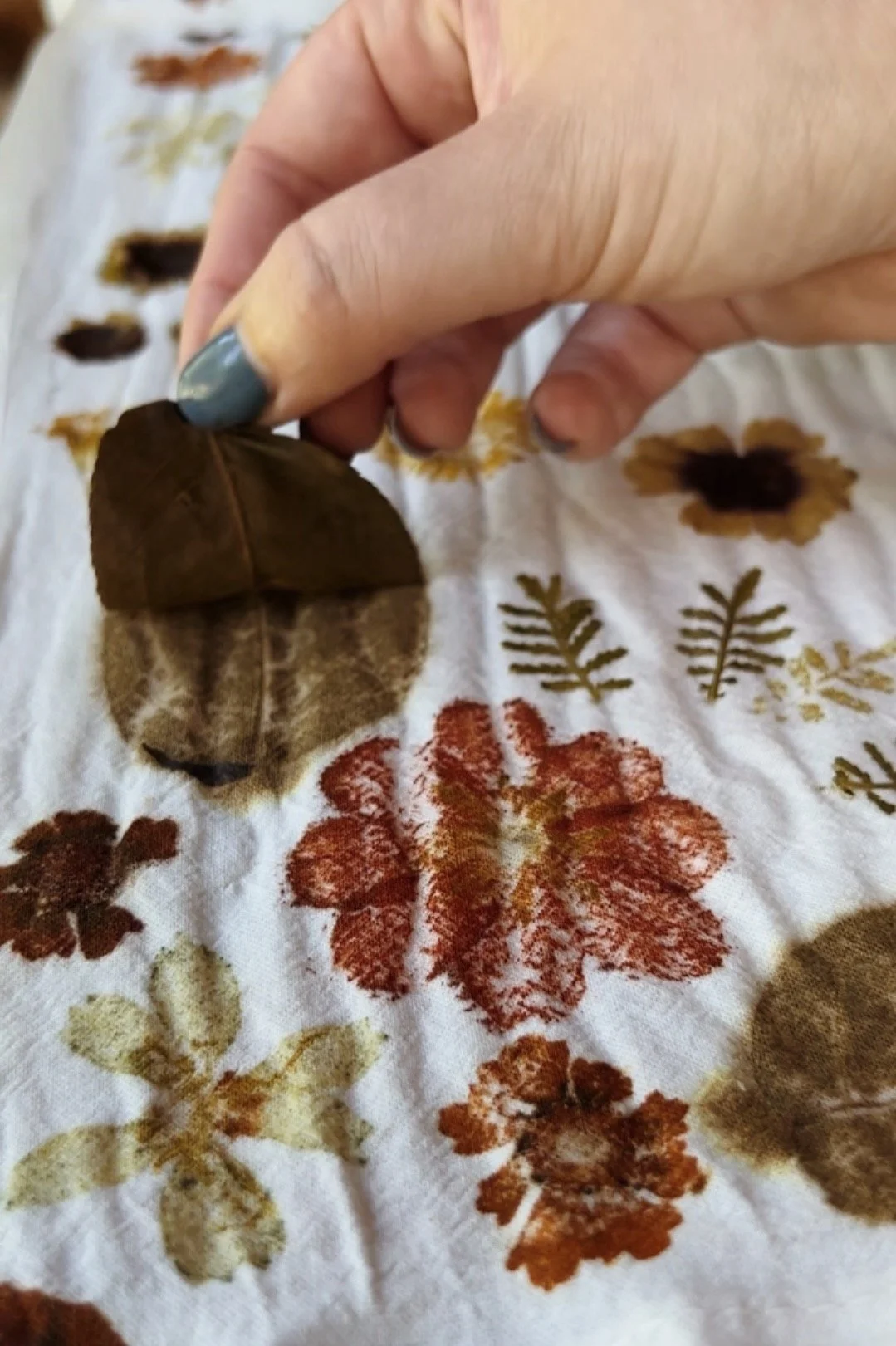
Plant material is peeled off the fabric after steaming, leaving its permanent mark.
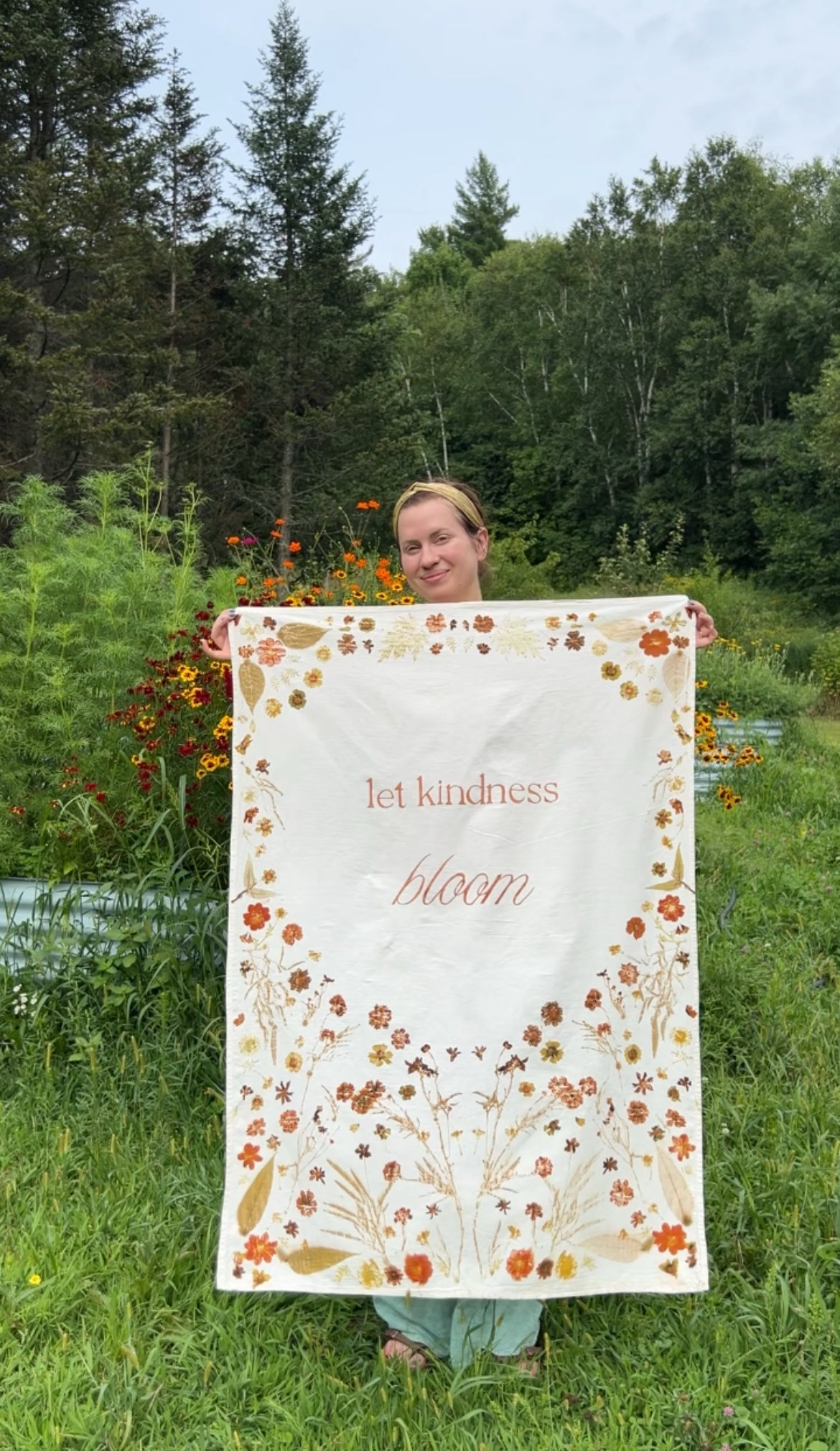
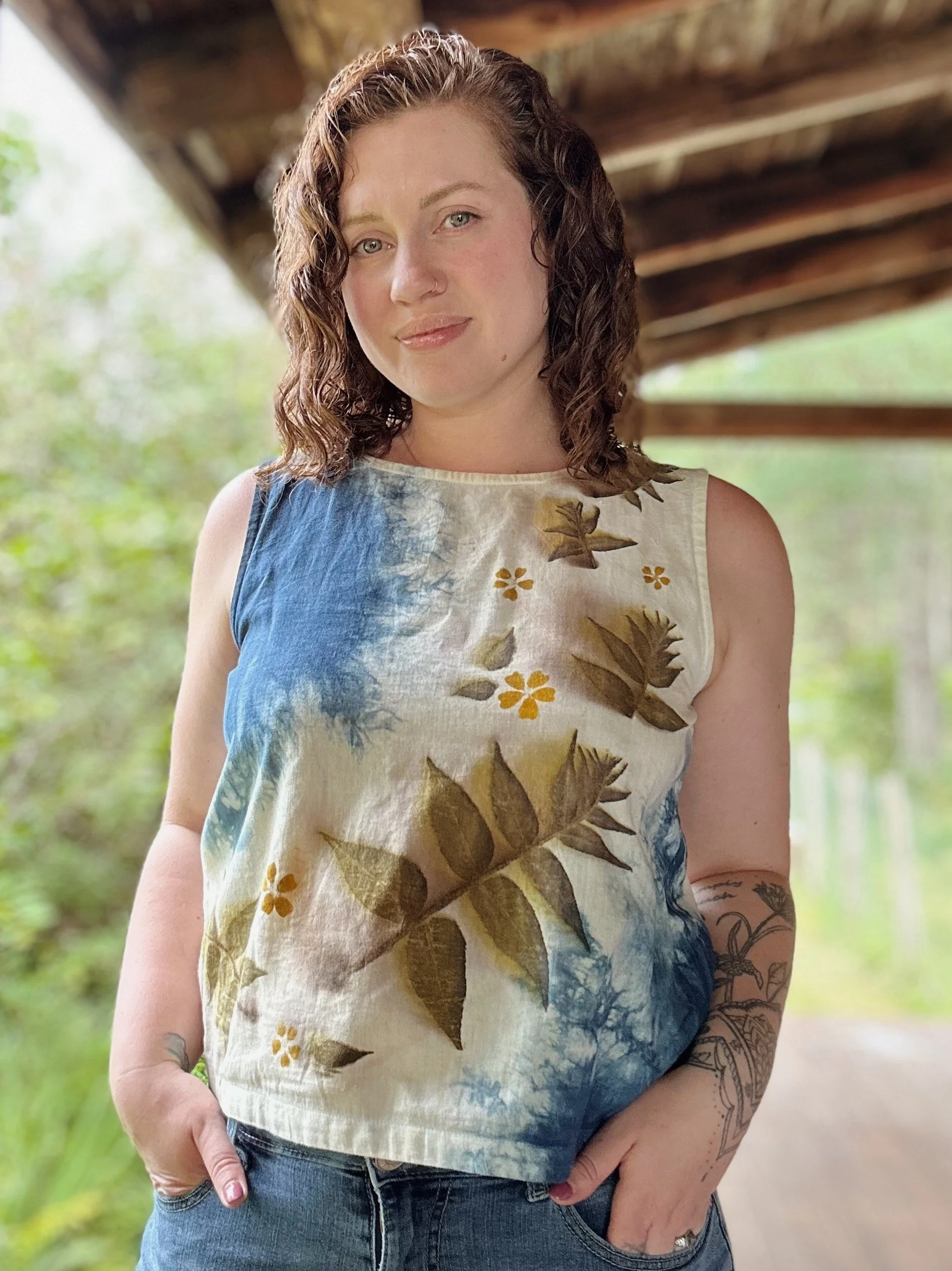
The final result - “let kindness bloom”. This piece took approximately 7 hours to complete.